

When Should You Be Concerned About Sharp Lower Left Abdominal Pain?
Sharp pain in the lower left abdomen can be caused by several conditions, including diverticulitis, ovarian cysts, and pelvic inflammatory disease. These conditions can lead to significant discomfort and complications if left untreated. Keung Lee, MD, PhD, MHA, at Triad Internal Medicine, provides thorough evaluations and personalized care to accurately diagnose the cause of your pain and create a tailored treatment plan to address your symptoms and improve your health. For more information, contact us or schedule an appointment online. We are conveniently located at 300 Mack Rd Suite B, Asheboro, NC 27205.
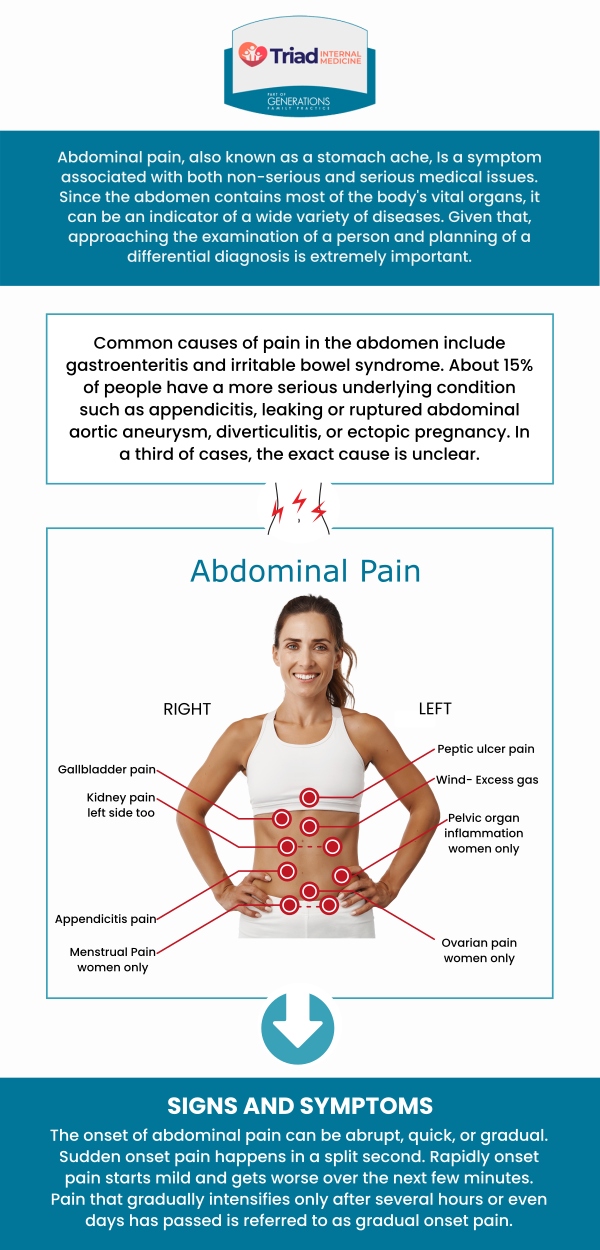
Table of Contents:
Can constipation or gas cause sharp lower left abdominal pain?
How do ovarian cysts contribute to lower left abdominal pain in women?
Can urinary tract infections cause sharp lower left abdominal pain?
How does diverticulitis cause sharp pain in the lower left abdomen?
Identifying Causes of Lower Left Abdominal Pain at Triad Internal Medicine
Constipation occurs when stool moves slowly through the colon and becomes hard or difficult to pass. The descending colon—which is located on the left side of your abdomen—is a frequent site of stool buildup, which can lead to sharp or cramping pain in that area. Similarly, trapped gas, whether from digestion or swallowing air, can stretch the colon and cause sudden pain or cramping in the lower left abdomen.
Most cases of constipation and gas are benign and can often be managed with dietary changes, proper hydration, and regular physical activity. However, it’s important not to ignore more severe or persistent symptoms. If your pain is severe, if you experience fever, vomiting, blood in your stool, or if the pain lasts more than a few days, it could be a sign of a more serious condition such as diverticulitis, ovarian issues, or another gastrointestinal problem. In these situations, prompt medical evaluation is crucial.
Ovarian cysts are especially common among women of reproductive age, and many women may not even realize they have them because they often do not cause symptoms. However, when symptoms do occur, they can be distressing and require careful evaluation.
Symptoms and When to Seek Care
The most frequent complaint associated with ovarian cysts is lower abdominal pain, which may be localized to one side depending on which ovary is affected. For example, a cyst on the left ovary may result in lower left abdominal pain. The pain can vary from a dull ache to sharp, sudden pain, especially if the cyst grows, ruptures, or causes the ovary to twist—a condition known as ovarian torsion. Torsion is a medical emergency that can lead to severe pain and requires prompt attention.
Other symptoms to watch for include:
● Bloating or a sensation of fullness
● Changes in your menstrual cycle
● Pain that radiates to the lower back, thigh, or groin
How Triad Internal Medicine Can Help
At Triad Internal Medicine, our experienced providers are skilled in evaluating and managing gynecological symptoms such as pelvic pain and suspected ovarian cysts. We conduct thorough medical histories, physical exams, and may recommend imaging studies such as pelvic ultrasounds to accurately diagnose the cause of your pain. Our priority is to rule out complications like cyst rupture, ovarian torsion, or, rarely, malignancy, and to ensure you receive the appropriate care.
UTIs can affect different parts of the urinary tract—including the bladder (cystitis), the urethra (urethritis), or, in more severe cases, the kidneys (pyelonephritis). When a UTI is present, patients may experience sharp or cramping pain in the lower abdomen, which can sometimes be more pronounced on one side, including the lower left.
Common symptoms of a UTI include:
● A frequent urge to urinate
● Burning sensation during urination
● Cloudy or foul-smelling urine
● Occasionally, fever
However, it’s important to remember that sharp lower left abdominal pain can also be caused by conditions unrelated to the urinary tract, such as gastrointestinal issues like diverticulitis, gynecological conditions in women, or musculoskeletal problems.
Because the causes of abdominal pain can be varied, our team at Triad Internal Medicine recommends that you pay close attention to any additional symptoms you may have. If you experience persistent or severe pain, or if you notice other concerning symptoms, we encourage you to schedule an appointment with us. Our providers can conduct a thorough evaluation, provide an accurate diagnosis, and ensure you receive the most appropriate treatment for your condition.
When diverticula become inflamed, the surrounding tissues and nerves can become irritated, leading to sharp, localized pain—typically in the lower left abdomen. This is the classic symptom of diverticulitis and one that we frequently evaluate at Triad Internal Medicine.
The pain arises as inflamed tissue stretches and presses against other abdominal structures. Inflammation can also cause muscle spasms in the colon, intensifying discomfort. Sometimes, the inflamed diverticula may result in localized infection or small perforations in the colon wall, leading to more severe pain. The body’s immune response to infection or inflammation in this region further contributes to the sensation of sharp pain.
At Triad Internal Medicine, we often see patients who experience persistent or severe lower left abdominal pain. In our practice, we use a combination of detailed medical history, physical examination, and, when necessary, diagnostic imaging to accurately diagnose diverticulitis. Early intervention is key, as untreated diverticulitis can lead to complications such as abscess formation, perforation, or even more serious infections.
If you are experiencing lower abdominal pain or other symptoms suggestive of diverticulitis, our team is here to provide prompt evaluation and personalized treatment.
Lower left abdominal pain can be caused by a variety of conditions, and identifying the root cause is crucial for effective treatment. Keung Lee, MD, PhD, MHA, at Triad Internal Medicine specializes in diagnosing and managing conditions that affect the lower abdomen, providing comprehensive care for patients experiencing persistent or severe discomfort.
Common causes of lower left abdominal pain include gastrointestinal issues such as diverticulitis, where small pouches in the colon become inflamed or infected, and irritable bowel syndrome (IBS), which can cause cramping, bloating, and changes in bowel movements. Dr. Lee carefully evaluates your symptoms, medical history, and conducts necessary tests to determine if your pain is related to these or other gastrointestinal concerns.
Other potential causes include kidney stones, urinary tract infections (UTIs), or gynecological conditions in women, such as ovarian cysts or endometriosis. Dr. Lee works closely with patients to understand their symptoms, guide them through diagnostic testing, and provide a personalized treatment plan to address the cause of their lower left abdominal pain.
If you’re experiencing unexplained abdominal pain, it’s important to seek medical attention to prevent complications and ensure appropriate care. Dr. Keung Lee, MD, at Triad Internal Medicine is dedicated to providing accurate diagnoses and compassionate treatment to help you achieve lasting relief and restore your quality of life. For more information, contact us or schedule an appointment online. We are conveniently located at 300 Mack Rd Suite B, Asheboro, NC 27205. We serve patients from Asheboro NC, Redding Hills NC, Greensboro NC, Randleman NC, Sophia NC, and Grays Chapel NC.
Check Out Our 5 Star Reviews



Additional Services You May Need
▸ Annual Physical Exam
▸ Internal Medicine
▸ Primary Care
▸ Chronic Diseases
▸ Immunizations
▸ Lab Testing
▸ Acute Illness
▸ STD Testing
▸ Flu Shots
▸ COVID-19 Testing
▸ Women’s Health
▸ Dot Physical
▸ Walk in Clinic
▸ X-ray
▸ Urgent Care
▸ Preventative Medicine
▸ Immigration Physical Exams
▸ Trigger Points
▸ Joint Injections
▸ Telehealth
▸ Medical Weight Loss
▸ Addiction Treatment



 Send Text
 How May I Help You?